
A typical storm-damage call starts the same way: a homeowner heard a loud bang during a wind event, and now the garage door is bowed outward between the rollers, or a track has pulled away from the wall on one side. Sometimes the door itself looks fine, but the opener won't respond because the power blinked out mid-storm and the battery backup, if there was one, never got tested. The pattern is consistent enough that it's worth walking through before the next front moves across Allegan County.
Why the Garage Door Takes the Brunt of It
Every other wall in a house is a solid, continuous surface. The garage door is a large moving panel held in place by tracks, rollers, hinges, and a handful of fasteners into the framing. It's also usually the single biggest opening in the home's exterior. When wind hits a house, pressure builds on the windward side and drops on the leeward side. If the garage door fails and lets wind push inside, that pressure has nowhere to go but up, which is part of why homes with garage door failures see more roof and gable damage than homes where the door holds.
Standard residential doors are built for everyday use and typical wind exposure, not for sustained high-wind events. The weak points are consistent: the track brackets where they bolt into the jamb, the end hinges on the top and bottom panels, and on older doors, thinner steel or wood panels that flex more than current models.
Signs a Door Won't Hold Up Well
- Visible daylight or gaps around the edges when the door is closed, which means wind-driven rain and gusts are already getting past the seals.
- Loose or rattling tracks — if you can wiggle the track with your hand, the mounting hardware has backed out over time.
- Panels that flex noticeably when you push on them from inside the garage.
- An opener with no battery backup, which matters because a power outage during a storm can leave the door unable to close at all if it's partway open.
- Worn or missing weatherstripping at the bottom and sides, common after a few seasons of road salt spray and freeze-thaw cycling in this area.
Practical Steps Before the Next Storm System
Reinforcing a garage door doesn't usually mean replacing it. There are a few levels of investment depending on the door's age and condition:
- Check and tighten track hardware. Lag bolts and fasteners work loose over years of vibration and temperature swings. A technician can re-anchor tracks into solid framing, not just the trim.
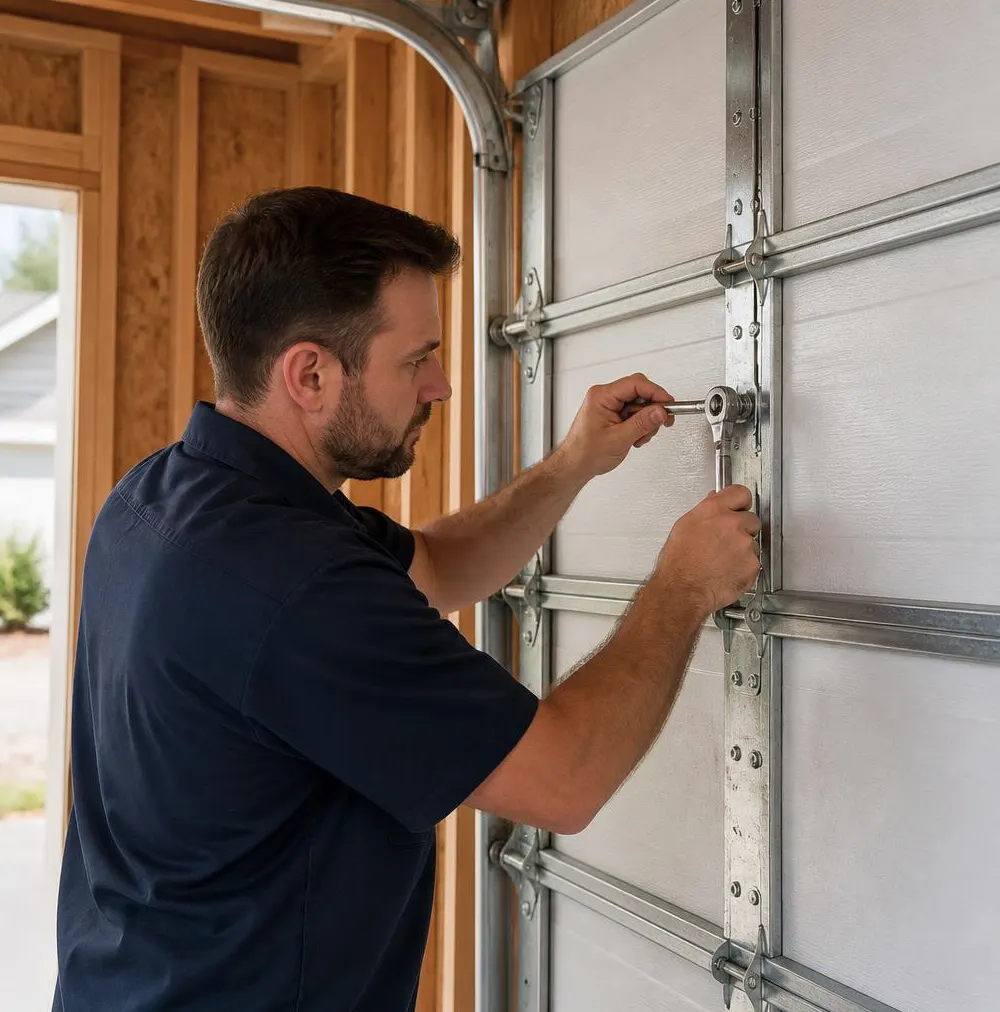
- Add horizontal bracing kits. These attach to the inside of each panel and tie into the vertical tracks, stiffening the whole door against bowing. National pricing for a basic kit typically runs in the low hundreds of dollars installed, far less than replacing a door after it fails.
- Inspect hinges and rollers. Cracked or heavily rusted hinges are common on older steel doors in this climate because of road salt carried in on vehicles. Replacing worn hinges is inexpensive compared to the alternative of a hinge letting go mid-storm.
- Replace worn weatherstripping and the bottom astragal seal. This keeps wind-driven rain out and also improves the door's resistance to pressure changes.
- Consider a battery backup for the opener if the garage door is also the main entry point to the house or shelters vehicles that need to move quickly before a storm.
- For doors over 15-20 years old with thin panels, ask about wind-rated replacement doors. These use heavier gauge steel and reinforced tracks designed to resist higher wind loads, and they're worth discussing if the current door already shows flex or damage.
After a Storm: What to Check
Once the wind has passed, walk the door before using it. Look for new gaps between panels, a track pulled away from the jamb, or a door that no longer sits flush when closed. If the opener struggles to lift the door or it moves unevenly, don't force it — a bent track or damaged panel can put the opener motor under more strain and cause a second failure. If the power was out, confirm the opener relearns its limits correctly once it's back on.
When to Call Plainwell Garage Door
If a door is flexing in the wind, a track has pulled loose, or a storm has already left visible damage, it's time for a proper inspection rather than a quick DIY fix. Plainwell Garage Door handles both garage door repair for storm-related damage — re-anchoring tracks, replacing bent sections, fixing hinges — and garage door installation for homeowners whose current door is old enough that reinforcing it doesn't make sense anymore. We'll look at the actual condition of the tracks, panels, and opener hardware and tell you honestly whether a repair will hold or whether it's time to talk about a sturdier replacement.
If you're in Plainwell, Otsego, Allegan, Martin, Kalamazoo, Portage, Richland, or Cooper Township and want your garage door checked before the next round of fall storms, call Plainwell Garage Door. We show up on time and tell you exactly what the door needs.